Is a Herniated Disc Considered a Disability?
You can get disability for a herniated disc if your symptoms prevent you from maintaining consistent employment. A herniated disc can qualify as one of the conditions that qualify for disability under Social Security Administration (SSA) policy when it causes significant pain, nerve damage, and functional limitations that prevent engaging in full time work. This condition occurs when one of the spinal discs slips or ruptures, placing pressure on nearby nerves and leading to pain, numbness, or weakness. The SSA evaluates claims based on a definite diagnosis, the severity of symptoms, and whether the condition has lasted or is expected to last for at least 12 months. Treatment response, including physical therapy, medication, or surgery, is also considered.
Even if you do not meet a listing in the Blue Book, such as in Section 1.15 (Disorders of the Spine) you may still qualify for SSDI for a herniated disc or SSI physical disability benefits depending on your work history and financial situation. This condition is typically evaluated under musculoskeletal listings, in particular those linked to spinal disorders.
Common Symptoms the SSA Looks For
When reviewing SSA symptoms for a herniated disc, the SSA concentrates on how the condition affects mobility, strength, and nerve function. Common symptoms include chronic back or neck pain, radiating pain into the arms or legs (often known as sciatica), numbness, tingling, and muscle weakness. These symptoms can drastically limit your ability to stand, walk, sit, or use your hands effectively. In the most severe cases, individuals may experience reduced coordination or balance. These issues are considered qualifying symptoms for disability when they interfere with essential work related activities. Symptoms may fluctuate, worsen with movement, or persist despite treatment, which means they fit into SSA criteria. Detailed documentation of these symptoms is critical when confirming the severity of your condition.
How a Herniated Disc Can Affect Your Ability to Work
The impact of a herniated disc on work limitations can be profound, particularly in jobs that require physical activity or prolonged sitting. Individuals may also struggle with lifting, bending, twisting, or standing for extended periods of time. Even a desk job can be difficult if sitting aggravates pain or causes stiffness. These limitations reduce productivity and make it a challenge to complete a full day at work. Nerve related symptoms such as weakness or numbness can also affect coordination and safety in the workplace. Frequent attendance to medical appointments may lead to missed work days.
SSA Medical Criteria for Physical Disabilities
To meet SSA disability criteria, you must provide strong medical evidence for the disability that demonstrates both the presence and severity of your condition during the SSDI application process. For a herniated disc, this typically includes imaging results from MRIs or CT scans, which can clearly show disc damage and nerve compression. Physician reports, neurological evaluations, and treatment records are also essential. The SSA evaluates your functional capacity, which includes your ability to perform tasks such as walking, lifting, sitting, and using your hands. Documentation of physical therapy, medications, or surgical interventions helps to establish how your condition has been managed. Even if you do not meet specific SSA physical impairment listings in the Blue Book, detailed evidence of your limitations can still help to support your claim.
If You Don’t Meet the SSA Criteria With a Herniated Disc
Many applicants qualify without meeting Blue Book requirements by demonstrating that their condition limits their ability to engage in full time work. In these cases, the SSA assesses your RFC limitations, or Residual Functional Capacity. For individuals with a herniated disc, this may include problems with sitting, standing or walking for long periods, as well as the limited ability to lift or carry objects. Chronic pain and nerve symptoms can also reduce your ability to maintain productivity. If your condition requires the frequent need to change positions or require more rest breaks, this can further support your claim. Chronic symptoms, failure of treatments, or worsening spinal issues can strengthen your case and help you appeal a disability denial.
Qualifying for SSI With a Herniated Disc
When starting the SSI application or applying for SSDI, it is important to understand the differences between these two programs. SSDI is based on your work history, earnings and payroll contributions while SSI eligibility is dependent on financial need and you do not need to have a earnings history to qualify.. A strong disability claim process requires consistent medical documentation and ongoing treatment. Records from specialists such as neurologists or orthopedic surgeons can help to confirm the severity of your condition. Proof showing that your symptoms are ongoing even with treatment is particularly useful. A work history reveals reduced capacity or job loss due to your condition can further support your claim. While initial denials often occur, many applicants achieve physical disability approval through the appeals process.
How Much Does Disability Pay With a Herniated Disc?
If you are asking how much does disability pay for a herniated-disc, it is important to note that benefit amounts are not based on the diagnosis alone. SSDI payments are calculated using your lifetime earnings, with the average SSDI benefit typically ranging from $1,500 to $1,800 per month. Some individuals can receive significantly higher SSDI payments if their earnings history is high and may receive $3,000–$4,000+ per month. SSI benefits are income based and there is no need to have a work history. The SSI payment amount is capped at approximately $943 per month for individuals, even though some states may offer additional supplements. These physical disability benefits are calculated in the same way regardless of the underlying condition. In some cases, you may also receive back pay depending on the starting date of your disability and when your claim is approved.
How to Apply With a Herniated Disc
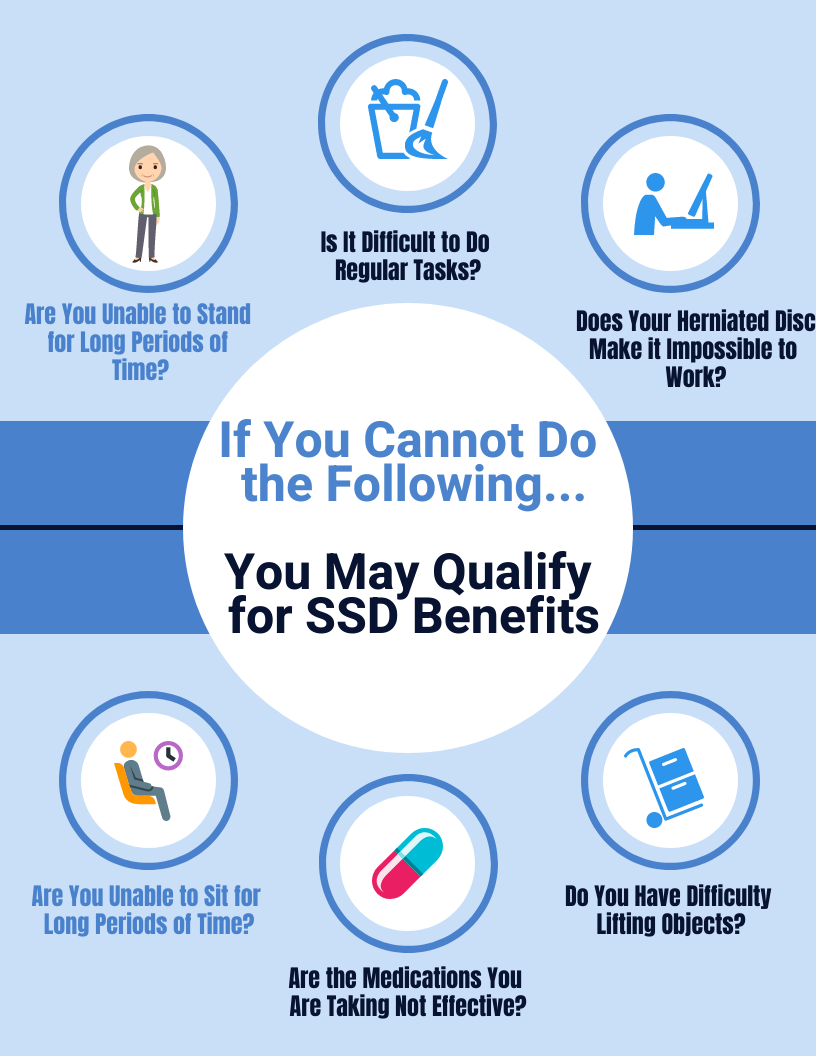
If you are considering how to apply for disability with a herniated disc, you can submit your application online, by phone, or by visiting a local SSA office. The main part of the process is providing detailed physical disability documentation that clearly shows how your condition affects your daily life. Keeping a record of pain levels, mobility limitations, and the impact on work activities can provide strong evidence for disability benefits. It is also helpful to document how your symptoms affect routine tasks such as sitting, standing, or lifting. Statements from physicians, therapists, employers and family members can help to strengthen your claim.
How a Disability Lawyer Can Help
An experienced physical disability attorney can help to gather the right medical evidence and organize it so it matches SSA criteria. They can ensure there are no gaps in your application and communicate with the SSA on your behalf. If your claim is denied, they can assist with the SSA appeal process which means prepare your case and represent you at hearings. Disability lawyers work on a contingency fee basis, which means you only pay a fee if and when your case is successful. Access to professional legal help can improve your chances of approval, particularly in complex cases involving spinal conditions.
Get Help With Your Herniated Disc Disability Claim Today
If your herniated disc is preventing you from maintaining steady employment, it is important to take action as soon as possible. Whether you are applying for SSDI or SSI, understanding your options is important. Consider requesting a free case evaluation which will help you to determine your eligibility and take the next step toward securing the benefits you really need.
