Is an Amputation Considered a Disability?
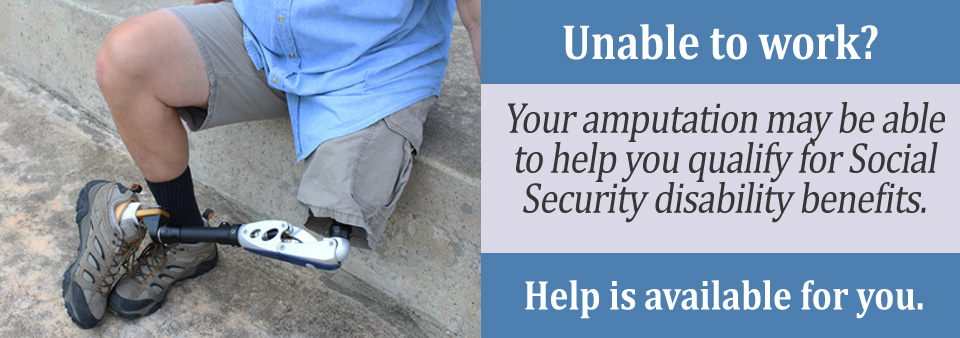
Yes, an amputation can qualify as a disability under Social Security Administration (SSA) criteria when it significantly limits your opportunity to work, making it one of the conditions that qualify for disability. An amputation is defined as the loss of a finger, hand, arm, foot, leg, or another body part due to an injury, disease, infection, vascular complications, or congenital conditions. Many individuals experience significant physical limitations that interfere with employment and daily activities.
The SSA acknowledges that the effects of an amputation extend beyond just the loss of the limb itself. Many people experience chronic pain, balance problems, mobility limitations, reduced strength, and complications associated with prosthetic use. Some applicants meet the SSA's criteria for musculoskeletal disorders which are found in the Blue Book Listing: 1.20. This listing determines whether the loss of a limb results in an extreme limitation in the ability to stand, balance, walk, or use the upper extremities effectively despite the use of a prosthetic device.
Even if you do not satisfy the specific Blue Book listing, you may still qualify for benefits through either the Social Security Disability Insurance (SSDI) or Supplemental Security Income (SSI) programs if the SSA determines that your limitations prevent you from maintaining full-time employment.
Approval for disability benefits is based on several factors. The SSA administrator reviews medical evidence to confirm the amputation diagnosis, evaluates the severity of symptoms, and determines whether the condition has lasted or is expected to last at least 12 months. Decision-makers also consider how well the condition responds to treatment and if the resulting functional limitations prevent the applicant from performing full-time work on a regular basis.
Common Symptoms the SSA Looks For
The SSA evaluates how the amputation affects your ability to function on a daily basis. Many individuals experience difficulty standing, walking, balancing, climbing stairs, carrying objects, or performing repetitive movements. A lower limb amputation often causes reduced endurance and mobility challenges, while upper limb amputations may interfere with reaching, grasping, lifting, writing, typing, or handling tools.
Chronic pain is a common problem as some individuals develop phantom limb pain, a condition that causes sensations of pain in the missing limb. Others experience residual limb pain, nerve damage, skin irritation, or pressure sores related to prosthetic devices.
The SSA considers whether you require an assistive device such as a cane, walker, crutches, or a wheelchair. Frequent falls, instability, and difficulty navigating uneven surfaces may further support a disability claim.
How Can an Amputation Affect Your Ability to Work?
Physical jobs often require standing, walking, lifting, carrying, climbing, and operating machinery. These activities may become difficult or impossible depending on the severity of the impairment. An individual with a lower extremity amputation may struggle to remain on their feet throughout the working day. Even when a prosthetic limb is in place, fatigue can develop quickly, limiting productivity and endurance. Jobs involving construction, manufacturing, transportation, warehouse work, and healthcare may become particularly challenging.
Even office based work may present difficulties. Chronic pain, fatigue, medical appointments, and prosthetic complications can interfere with attendance and concentration. Some individuals require frequent breaks or workplace accommodations that employers aren't always able to provide.
The SSA evaluates whether these limitations prevent you from performing your past work or are able to adjust to other types of employment available in the national economy.
SSA Medical Criteria for Physical Disabilities
The SSA maintains specific criteria for evaluating an amputation and other musculoskeletal impairments. Medical evidence must clearly document the amputation and any resulting limitations. Important evidence may include surgical reports, hospital records, physician notes, rehabilitation records, physical therapy evaluations, and prosthetic assessments. Documentation should explain how the amputation affects mobility, balance, strength, coordination, and daily activities.
The SSA may also review whether a prosthetic device allows effective movement. Some applicants continue to experience significant limitations despite using advanced prosthetics. In these situations, detailed medical documentation can help demonstrate the severity of the impairment.
If You Don't Meet the SSA Criteria for an Amputation
Not every applicant qualifies under a Blue Book listing. However, many individuals receive benefits through a Residual Functional Capacity (RFC) assessment.
An RFC evaluation examines what activities you can still perform despite your condition. The SSA reviews your ability to stand, walk, sit, lift, carry, push, pull, reach, handle objects, and complete work-related tasks on a consistent basis.
For example, an individual may be unable to stand for more than short periods, safely navigate a workplace, or perform tasks requiring both hands. Chronic pain, fatigue, and prosthetic complications may further reduce work capacity.
If the SSA determines that your limitations prevent you from returning to previous employment and adapting to other work, disability benefits may be approved; if your claim is denied, you can appeal a disability denial.
Qualifying for SSI With an Amputation
SSI and SSDI both provide disability benefits, but eligibility requirements differ.
SSDI is available to individuals who have worked and paid Social Security taxes long enough to earn sufficient work credits. SSI is designed for individuals with limited income and financial resources regardless of work history.
When evaluating an SSI disability claim, the SSA considers evidence that includes specialist evaluations, diagnostic testing, imaging studies, lab results, and comprehensive medical records. Documentation indicating that treatment has been unsuccessful or has only offered limited improvement can help to demonstrate the ongoing impact of the amputation. Consistent medical treatment is important because it shows how severe and persistent the symptoms are over time.
The SSA also evaluates how an amputation affects a person's ability to work, including any limitations that may prevent past work or any other substantial employment. Applicants should be aware that initial denials commonly occur but this doesn't necessarily mean a claim lacks merit. Many individuals are finally approved during the appeals process after stronger medical evidence is reviewed.
How Much Does Disability Pay for an Amputation?
The amount of disability benefits you receive depends on the program and your individual circumstances.
SSDI payments are based on your lifetime earnings record and work history. Monthly benefits vary, but many recipients receive between $1,400 and $1,500 per month. Individuals with higher earnings histories may receive larger payments.
SSI benefits are based on financial need and federal payment limits. The maximum monthly benefit is generally around $943 per month for an individual but it changes periodically and may be supplemented by certain states.
Applicants who are approved after the review process may also receive back pay covering eligible periods before approval.
How to Apply With an Amputation
When applying for disability benefits, it is important to understand the SSDI application process and provide comprehensive medical documentation that clearly explains your amputation and how it affects your ability to function. Medical records should include your amputation diagnosis, treatment history, specialist reports, and any documented physical or mental limitations.
Applicants should also describe how the symptoms affect daily activities such as walking, standing, driving, home-based tasks, personal care, and social interaction. Information about missed workdays, reduction in productivity, difficulty completing tasks, or an inability to maintain a regular work schedule can help to reveal the impact of the amputation on employment. Keeping a detailed journal that tracks your symptoms, pain levels, fatigue, mobility problems may provide vital supporting evidence. Statements from treating physicians, specialists, family members, caregivers, or former employers can further explain how the amputation affects day-to-day functioning and work performance.
Disability applications can be submitted online, by telephone, or at a local Social Security office. Providing complete and accurate information from the start can help to avoid any unnecessary delays.
How a Disability Lawyer Can Help
A disability lawyer can assist throughout the application and appeals process. Attorneys help gather medical evidence, prepare forms, communicate with the SSA, and ensure important documentation is submitted correctly.
If a claim is denied, a lawyer can present evidence before an administrative law judge and argue why the applicant meets SSA disability requirements. Disability attorneys work on a contingency fee basis, meaning they only receive a payment as soon as the disability benefits are awarded.
Get Help With Your Amputation Disability Claim Today
If an amputation is preventing you from working, you may qualify for disability benefits. Whether you are filing an initial application or appealing a denial, obtaining assistance can greatly improve your chances of success.
Seek a free case evaluation today.
